In the competitive world of e-commerce and retail, setting the right price for your water bottles is essential to achieving business success. Pricing not only affects the immediate revenue of your brand but also plays a pivotal role in shaping customer perceptions, brand positioning, and long-term profitability. Striking the right balance between maximizing profits and meeting consumer demand is crucial for any water bottle business, whether it focuses on sustainability, performance, luxury, or affordability.
Water bottle brands face a unique challenge in determining a pricing strategy that reflects the value of their products while remaining competitive in a saturated market.
The Importance of Pricing in the Water Bottle Industry
Consumer Perception and Value
The price of a water bottle communicates more than just the cost of materials and manufacturing; it also reflects the perceived value of the product in the eyes of the consumer. Whether it’s a high-end stainless steel bottle or a budget-friendly plastic one, consumers often associate price with quality. As a result, water bottle brands need to ensure that their pricing aligns with the value they offer to their target audience.
For example, a luxury brand that focuses on premium materials, sophisticated designs, or eco-conscious values should set a higher price point to reflect the quality and exclusivity of the product. On the other hand, a more budget-friendly brand may prioritize affordability, targeting customers who are more price-sensitive but still value functionality and quality.
Competitive Landscape
The water bottle market is highly competitive, with many brands offering similar products at various price points. Understanding how your pricing compares to competitors is critical for remaining relevant and competitive. If your prices are too high compared to competitors offering similar features and benefits, you risk losing potential customers to cheaper alternatives. However, pricing too low can make it challenging to cover costs and reduce perceived value.
Market research is essential for determining where your water bottle brand fits within the competitive landscape. By analyzing competitors’ pricing, features, and customer satisfaction, you can position your products strategically and find a price point that balances profit with consumer demand.
Types of Pricing Strategies for Water Bottles
Cost-Plus Pricing
Cost-plus pricing is one of the most straightforward and commonly used strategies in retail. This approach involves calculating the total cost of producing a water bottle, including materials, labor, packaging, shipping, and overhead, and then adding a markup to ensure profitability.
Calculating the Markup
The markup is typically expressed as a percentage of the cost of production. For example, if the total cost of producing a water bottle is $5, and you want to add a 50% markup, the selling price would be $7.50. The markup ensures that your business covers production costs while generating a profit.
Cost-plus pricing is ideal for businesses that have a clear understanding of their production costs and want to maintain a consistent profit margin. However, it does not consider factors such as consumer demand, competitor pricing, or perceived value, which may make it less effective in a highly competitive market.
Value-Based Pricing
Value-based pricing focuses on the perceived value of the product to the consumer rather than the actual production cost. This strategy involves setting the price based on how much consumers are willing to pay for the benefits they receive from the product, such as durability, functionality, eco-friendliness, or brand prestige.
Determining Perceived Value
For water bottle brands, determining perceived value involves understanding what customers value most about the product. For example, eco-conscious consumers may be willing to pay more for a water bottle made from sustainable materials or one that reduces single-use plastic. On the other hand, fitness enthusiasts may value features such as temperature control, leak-proof designs, or easy portability.
Value-based pricing requires in-depth market research, including consumer surveys, focus groups, and competitor analysis. By understanding what your target audience values and how much they are willing to pay for it, you can set a price that maximizes both demand and profitability.
Penetration Pricing
Penetration pricing is a strategy where businesses set an initially low price to quickly attract customers and gain market share. The goal is to penetrate the market quickly and build a customer base before gradually increasing prices over time.
Building Market Share
Penetration pricing is often used by new or emerging brands that want to establish a presence in a crowded market. By offering water bottles at a lower price point than competitors, brands can attract budget-conscious customers and generate buzz around their products. Once the brand has built a loyal customer base and achieved a certain level of market penetration, prices can be raised to a more sustainable level.
While penetration pricing can help build market share quickly, it requires careful consideration of profit margins. Pricing too low can make it difficult to cover costs, while raising prices too soon can lead to customer dissatisfaction.
Skimming Pricing
Skimming pricing is the opposite of penetration pricing. This strategy involves setting a high initial price for a product when it is first introduced to the market and gradually lowering the price over time as the product becomes more widely available.
Targeting Early Adopters
Skimming pricing is ideal for products that offer unique features or innovations that can justify a higher price point. For example, if your water bottle brand introduces a new type of insulated bottle that can keep water cold for an extended period, you may initially price the product higher to target early adopters who are willing to pay a premium for the latest and best technology.
As demand for the product grows and competitors begin to offer similar alternatives, you can gradually lower the price to attract a broader customer base. Skimming pricing allows brands to capitalize on early adopters who are willing to pay more, while also adapting to changing market conditions over time.
Factors to Consider When Setting Prices for Water Bottles
Production Costs and Margins
When setting a price for your water bottles, it is essential to account for all production costs, including raw materials, labor, packaging, shipping, and overhead. These costs directly impact your profit margins, and underpricing your water bottles can result in negative margins, making it difficult to sustain your business.
To determine a profitable price point, start by calculating the cost of each unit and add a reasonable markup to ensure that you cover your costs and achieve your desired profit margin. Keep in mind that the more expensive the materials or production process, the higher the price needs to be in order to maintain profitability.
Consumer Demand and Market Trends
The price of water bottles must reflect the current demand in the market. Prices should be adjusted based on the overall demand for your products and any market trends that affect consumer behavior. For example, if there is a growing demand for eco-friendly, sustainable products, consumers may be willing to pay a premium for water bottles made from recyclable materials or other environmentally friendly features.
Understanding seasonality and changing consumer preferences is also essential for setting the right price. For instance, if your water bottle brand offers bottles designed for outdoor activities, you may find that demand increases in the summer months, allowing for price adjustments based on seasonality.
Competitor Pricing
Your pricing strategy should be informed by how your competitors are pricing similar products. By analyzing your competitors’ prices, you can identify where your water bottle brand fits within the market and determine a price point that is competitive while still aligning with your brand’s value proposition.
If your competitors are offering similar water bottles at lower prices, you may need to lower your price or offer additional value through product features, customer service, or branding. Alternatively, if your water bottles are differentiated by premium features, you may be able to justify a higher price and position your brand as a luxury or high-end option.
Brand Positioning
Your pricing strategy should align with your brand’s positioning in the market. For example, if your water bottle brand focuses on sustainability and targets eco-conscious consumers, your pricing should reflect the higher costs of sustainable materials, but still offer a reasonable price that appeals to environmentally-conscious buyers. Conversely, if you are positioning your brand as a budget-friendly option for everyday consumers, your pricing strategy should reflect that.
Pricing plays a significant role in shaping your brand’s identity and how customers perceive your product. Whether your brand is positioned as premium, value-focused, or innovative, your price should reflect that positioning and align with your marketing efforts.
Customer Segmentation and Pricing Tiers
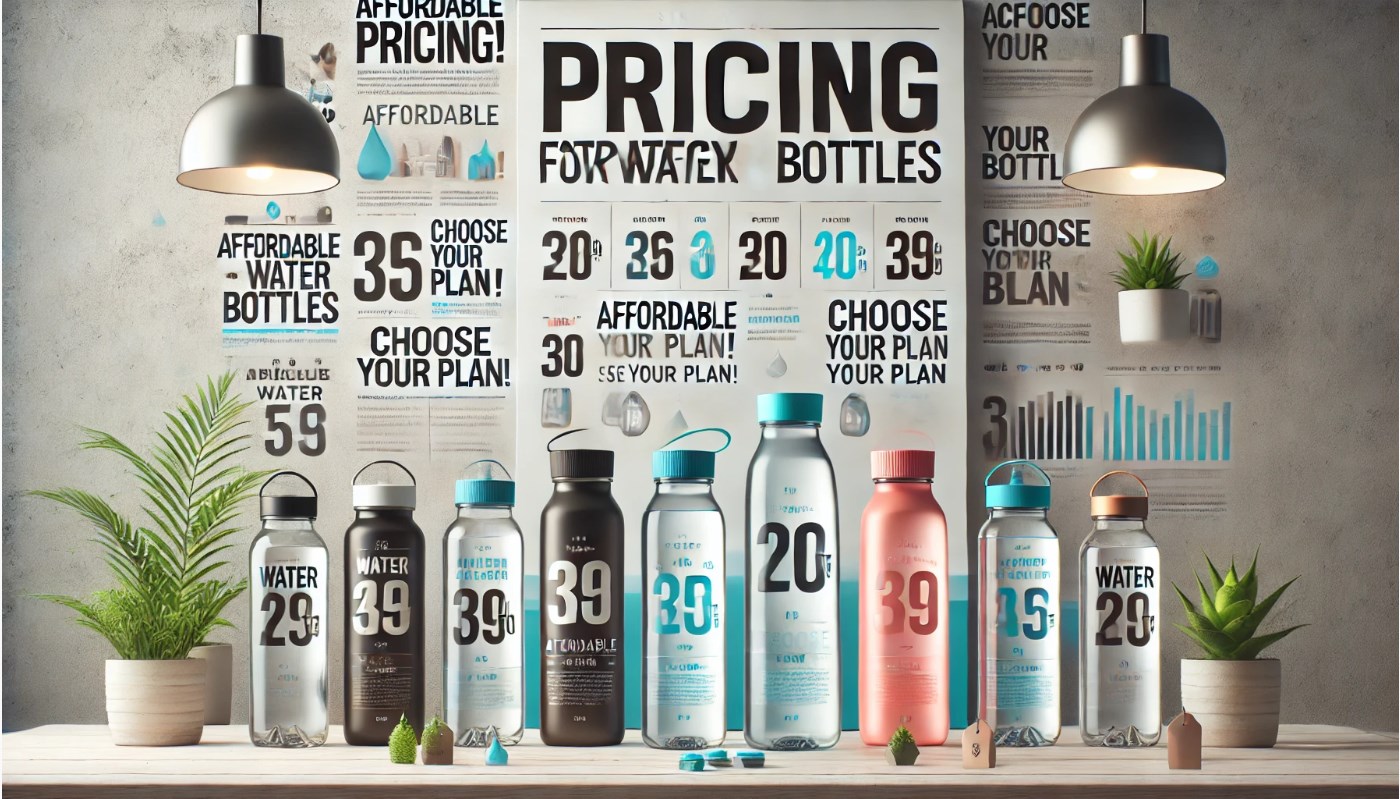
One effective strategy for pricing water bottles is to implement different pricing tiers based on customer segments. For instance, you could offer a premium line of water bottles with advanced features such as double-walled insulation or custom engravings, and price these higher to target more affluent customers. In contrast, a basic line of water bottles with standard features can be priced lower to appeal to more price-sensitive customers.
Customer segmentation allows you to offer a wider range of products to different types of consumers, increasing your market reach and accommodating a variety of budget preferences. This strategy also allows you to tap into different market segments without alienating any group.
Psychological Pricing Tactics for Water Bottles
Charm Pricing (Pricing Just Below Whole Numbers)
Charm pricing is a common psychological pricing tactic that involves setting prices just below a whole number, such as $19.99 instead of $20. While the difference is only a cent, research has shown that consumers perceive prices ending in “.99” or “.95” as being significantly lower than rounded prices.
For water bottle brands, using charm pricing can create the perception of a better deal, even if the actual difference in price is minimal. This tactic is especially effective when targeting price-sensitive customers who are looking for small discounts.
Bundling and Discounts
Bundling multiple products together at a discounted price can make customers feel like they are getting more value for their money. For example, offering a discount when customers purchase two or three water bottles together encourages larger purchases and can increase your average order value (AOV).
Similarly, limited-time discounts or flash sales can incentivize customers to make a purchase quickly. By promoting these offers through email, social media, or on your website, you can create a sense of urgency that motivates consumers to buy before the offer expires.
Price Anchoring
Price anchoring is a psychological pricing strategy that involves offering a high-priced product alongside a lower-priced product to make the latter appear more affordable. For example, if you offer a high-end, premium water bottle priced at $50, and then introduce a similar bottle at $30, customers may perceive the $30 bottle as a better value.
Price anchoring works by leveraging customers’ tendency to compare prices and choose products that seem like the best value. For water bottle brands, this strategy can be used effectively when offering different product tiers, creating a sense of value by placing the higher-end product next to more affordable options.
Conclusion
Setting the right price for your water bottles requires careful consideration of several factors, including production costs, consumer demand, competitor pricing, and brand positioning. The pricing strategy you choose should reflect your brand’s values, meet customer expectations, and help you achieve long-term profitability. Whether you choose cost-plus pricing, value-based pricing, penetration pricing, or skimming pricing, it’s important to continuously monitor the market, adjust your pricing strategy, and ensure that it aligns with both customer demand and your business goals. By understanding the nuances of pricing and leveraging psychological pricing tactics, you can position your water bottle brand for success in a competitive market.